
Vöhl had a large Jewish community until the Nazi era. Over 15 % of the population were Jewish. The synagogue, the Jewish cemetery and houses formerly inhabited by Jews in the town are reminders of this period. Documents from archives and visits by former Vöhl Jews and their descendants make this history tangible.
Visits by former Jewish residents and their descendants bring the history of Vöhl’s Jewish community to life. For the visitors, these visits are a confrontation with what is often a deeply distressing family history. Since 2000, many such visits have taken place, and lasting connections have been formed.
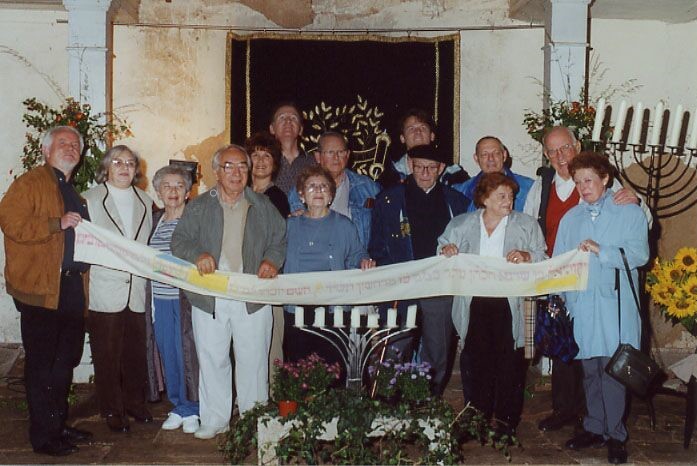
In the year 2000, the Support Group of the Synagogue in Voehl invited former Voehl residents of Jewish faith to the town. The first meeting took place in Café Tassius in Voehl on 6 September 2000 and the introductions were recorded on tape.
Henriette Hennig transcribed the audio recordings in 2018 during her work as a "Landkulturbotin".
The following Jewish persons or their descendants were present in the order in which they were seated:
Walter Mildenberg (*1921) und Marian Mildenberg, geb. Katz (*1925); USA
siehe: Stammbaum Familie Mildenberg, Levi
Audio recording and transcription of the person's introduction

Gisela Frees, geb. Mildenberg (*1931) und Werner Frees; Vöhl
siehe: Stammbaum Familie Mildenberg, Mayer
Audio recording and transcription of the person's introduction
Ursula Behrend, geb. Mildenberg (*1924) und Howard Behrend (*1923); USA
siehe: Stammbaum Familie Mildenberg, Levi
Audio recording and transcription of the person's introduction
Carol Baird, geb. Davidsohn, ihre Großmutter war Ida D., geb. Frankenthal (*1945) und Stephen Baird (*1944); USA
siehe: Stammbaum Familie Frankenthal, Herz
Audio recording and transcription of the person's introduction
Geffroy Baird (*1974), seine Urgroßmutter war Ida Davidsohn., geb. Frankenthal; USA
siehe: Stammbaum Familie Frankenthal, Herz
Audio recording and transcription of the person's introduction
Walter Rothschild (*1920) und Sonja Rothschild, geb. Jäger; Argentinien
siehe: Stammbaum Familie Rothschild, Ascher + Spring
Audio recording and transcription of the person's introduction
Richard Rothschild (*1905) und Gerda Rothschild, geb. Westfeld (*1913); Israel und Deutschland
siehe: Stammbaum Familie Rothschild, Ascher + Spring
Audio recording and transcription of the person's introduction
Rudolf Rothschild (*1931) und Sigrid Rothschild, geb. Mayer; Argentinien
siehe: Stammbaum Familie Rothschild, Ascher + Spring
Audio recording and transcription of the person's introduction
The other persons present were (in the order in which they were seated):
| Person | Funktion |
|---|---|
| Kurt-Willi Julius | Förderverein Synagoge in Vöhl |
| Ilse Schenk | Förderverein Synagoge in Vöhl |
| Dr. Ingrid Engelsing | Ärztin in Vöhl |
| Barbara Sahra Küpfer | Förderverein Synagoge in Vöhl |
| Heinz Schäfer | Förderverein Synagoge in Vöhl |
| Anna Evers | Förderverein Synagoge in Vöhl |
| Günter Maier | Pfarrer in Vöhl |
| Claus Hömberg | Architekt der Renovierung |
| Birgit Stadtler | Förderverein Synagoge in Vöhl |
| Sandra Stadtler | Förderverein Synagoge in Vöhl |
| Peter Göbel | Förderverein Synagoge in Vöhl |
| Karl-Heinz Stadtler | Förderverein Synagoge in Vöhl |
You can play the entire recording and the complete transcript here:
This round of visitors was the start of the programme for the Visit by former Jewish residents in September 2000.
Fifteen descendants of Vöhl Jews visited Vöhl for the 25th anniversary of the association. Here are pictures of the visit.

11th July 2024 The group photo at the beginning of the evening. On the left, the block of nine from the Baird family, followed by Ruben and Ingrid Herzberg from Hamburg, Camille Calman and Elizabeth Foote as well as Michael and Dalia Dimor. 2nd from right: District President Mark Weinmeister from Kassel.
Grafiknachweis
 Foto: Walter Schauderna
11th July 2024 The district president Mark Weinmeister from Kassel and the chairman of the association Karl-Heinz Stadtler.
 Foto: Walter Schauderna
11th July 2024 All those present introduce themselves. This is Flynn Baird, who incidentally currently works at Porsche in Stuttgart, the city that his great-grandparents left for the USA in 1939 and therefore escaped the Holocaust.
Grafiknachweis
 Foto: Walter Schauderna
12th July 2024 At the "reception", H. Heider from the Network for Tolerance, which sponsored the anniversary, to the right of her, Th. Brömmelhaus from the association Rückblende - Gegen das Vergessen Volkmarsen; to the left in front of them Mayor K. Kalhöfer, in the left door frame Pastor M. Müller, at the right door frame of Mr and Mrs Göbel, at the left pillar Camille Calman and Elizabeth Foote, in the foreground Michael Dimor and the Baird family.
 Foto: Walter Schauderna
12th July 2024 Visiting the Jewish cemetery: Ingrid Herzberg and Dalia Dimor, behind them Eliszabeth Foote. On the right: Günter Maier and Christian Schnatz.
 Foto: Walter Schauderna
12th July 2024 Ulrich Müller and Ruben Herzberg at the memorial plaque, Elizabeth Foote walks there. Carol Baird and Karl-Heinz Stadtler in the foreground.
 Foto: Walter Schauderna
12th July 2024 Father Steve Baird and son Geoffrey Baird with grandchildren Galen and Flynn.
 Foto: Walter Schauderna
12th July 2024 Artist and craftsman Christian Schnatz explains how he made the memorial plaque at the cemetery. from left to right: Michael Dimor, Theo Brömmelhaus, retired colonel Jürgen Damm, Ingrid and Ruben Herzberg.
 Foto: Walter Schauderna
12th July 2024 Lunch in Müller's garden. Ulrich Müller and Peter Göbel at the two barbecues, beef and pork strictly separated.
 Foto: Walter Schauderna
12th July 2024 Anna Evers and Günter Maier from the support group.
 Foto: Walter Schauderna
12th July 2024 In her lecture, Prof Dr Christiane Brüning asked herself and us whether and, above all, how the Shoah should be remembered in the future.
 Foto: Walter Schauderna
12th July 2024 Sahra Küpfer at the Kiddush on Friday evening before the anniversary celebration in the synagogue.
 Foto: Walter Schauderna
12th July 2024 Sahra Küpfer and Beate Lambert provide the musical framework for the celebration.
Video: Ulrich Müller
12th July 2024 Welcome by the chairman of the synagogue support group in Voehl.
Video: Ulrich Müller
12. Juli 2024 Carol Baird, assisted by Karin Keller, for the descendants of the Frankenthal family. She wrote down her memories in the brochure: “Memories from Carol Davidson Baird”.
Video: Ulrich Müller
12. Juli 2024 Daniel, Noah and Steve Baird with the song "Deportieren", which deals with the question of whether anyone has really realised that no one is coming back.
 Foto: Walter Schauderna
12th July 2024 Philipp Wecker, 2nd Chairman of the Sponsors' Association, presents certificates and pins to the new honorary members, represented here by Peter Göbel.
Grafiknachweis
 Foto: Walter Schauderna
13th July 2024 There was great interest in the naming of the previously nameless alleyway below the synagogue as Salomon Bär Gässchen.
 Foto: Walter Schauderna
13th July 2024 Salomon Bär was a teacher at the Jewish school in Vöhl for 40 years. He lived from 1815-81.
 Foto: Walter Schauderna
13th July 2024 Carol Baird unveils the house plaque in front of the house on Schulberg.
 Foto: Walter Schauderna
13th July 2024 Ruben Herzberg and Elizabeth Foote unveil the plaque on the house at Arolser Str. 8.
 Foto: Walter Schauderna
13th July 2024 Michael Dimor in front of the plaque on the property at Arolser Str. 13.
 Foto: Walter Schauderna
13th July 2024 On the podium from left to right: Dr Wolfgang Werner, ‘Arbeitskreis Rückblende - Gegen das Vergessen’ in Volkmarsen; Dr Annegret Wenz-Haubfleisch, Landsynagoge Roth; Dr Marion Lilienthal, Gedenkportal Korbach; moderator Prof. Dr Dietfrid Krause-Vilmar; Sebastian Sakautzki, Trutzhain Memorial and Museum; Dr Martin Arnold, Association of Friends of Jewish Life in the Werra-Meißner District; Julia Drinnenberg, Jewish Department at the Hofgeismar Museum.
 Foto: Walter Schauderna
13th July 2024 Aquabella. Her only instrument is her voice. A capella concert with Maria Thomaschke, Pamela Neuffer, Nina Gronich and Bettina Stäber.
Grafiknachweis
 Foto: Ulrich Müller
14th July 2024 Church service in the protestant Martinskirche in Vöhl.
 Foto: Walter Schauderna
14th July 2024 Pastors Matthias Müller and Günter Maier conducted the service together, also in dialogue.
 Foto: Ulrich Müller
14th July 2024 At the invitation of Mr and Mrs Klein, visit to the Place of Mutual Respect at the entrance to the Jewish cemetery in Volkmarsen.
 Foto: Ulrich Muller
14th July 2024 US-Americans, Hamburgers, Volkmarser and Vöhler at the entrance to the Gustav-Hüneberg-Haus in Volkmarsen.
 Foto: Ulrich Müller
14th July 2024 The medieval mikvah in the Gustav Hünberg House in Volkmarsen: standing on the glass plate, you can see the water in the depths.
 Foto: Walter Schauderna
14th July 2024 Farewell evening with Sahra Küpfer, Elisabeth Foote and Karl-Heinz Stadtler. Karl-Heinz Stadtler thanks the guests for coming and the members of the Board of Directors and their partners for their commitment before and during the anniversary.
 Foto: Walter Schauderna
14th July 2024 Farewell talks.
The Synagogue in Voehl
The synagogue in Voehl is a well-preserved building from 1827 with a gallery and vaulted ceiling. The interior was completely destroyed on the night of the pogrom in 1938. Today, events are held in this former prayer room; the adjoining rooms house a museum and a library about Judaism.
Reconstruction of the interior of the synagogue
The prayer room of the synagogue lost its interior furnishings in 1938. With digital tools, the former impression of the room can be recreated.

Museum in the synagogue
The museum shows aspects of Jewish culture and way of life. The exhibition rooms are the former living quarters of the synagogue. Part of the museum is the prayer room of the synagogue.
These objects have survived from the time of the lively Jewish community in Vöhl.
Memorial to all deportees of the Nazi era and steles in the garden
Sculpture: "Auf der Schwelle zwischen Leben und Tod" (2007) von E. R. Nele.
Guided Tour
In 2002, this tour was created as a Power Point presentation.
Houses inhabited by Jews in the center of Vöhl
Plan of village center
 ©Hessisches Landesvermessungsamt 2003, Grafik: Kurt-Willi Julius
Assembled by Kurt-Willi Julius in 2005. The old recordings and the descriptions come from the Jürgen Evers collection. Translated by Kimberley Simon.
List of houses inhabited by Jews in the center of Voehl with links to house descriptions
read more
If you walk through Vöhl with an open eye, you will still find traces of Jewish life. There are the names of Abraham Katzenstein or Selig Frankenthal carved into the door of an old smithy alongside those of Christian farmers, there is the inscription in Hebrew characters above the door of a house that belonged to the Schaumburg merchant family in the 19th century, and of course there is the Jewish cemetery in Herzingsgrube and the former synagogue.
Start at the synagogue. Go down the “Mittelgasse”, then turn right into “Basdorfer Staße”. Turn right into “Schulberg”, then left at “Auf der Höhe”. Pass the church and head back to Basdorfer Straße down “Kirchweg”. Turn right again. Behind the pizzeria, turn right into Arolser Straße or if you want you can take a short detour to the house at “Henkelstraße 7”. Walk up “Arolser Staße” to the footpath in direction of the Protestant parish office “Günter Sternberg Weg”. Turn right on “Gartenstraße” and walk up “Zum Köppel”. There is the entrance of the Jewish cemetery (entry is forbidden on Shabbat (= Saturday) and on Jewish holidays). Leave the cemetery through the same gate and walk down the street “Zum Köppel” to “Arolser Straße”. At the crossing of “Arolser Straße” and “Nordstraße” is a memorial stone honoring the Jews from Vöhl. Cross “Arolser Straße” into town and turn left into “Mittelgasse” to get to the starting point.
Houses inhabited by Jews in the district of Basdorf
Brunnenstraße 6
Lewi Kaiser bought the house in 1850 from the Heine-Müller families. In 1911 he sold the property to the Daude family from Asel.
Mühlenstraße 15
Inscription on beam: In the name of God, Feist Keiser and his wife built this house on May 29th 1859.
Mühlenstrasse 6
House of the merchant Bendix Külsheimer. Mentioned as a house owner around 1880.
Houses inhabited by Jews in the district of Marienhagen
Schulweg 8 (Information board)
Selig Kratzenberg family. Originally the restaurant and manufactory store “Zum Grünen Kranze”. After the death of the owner Selig Kratzenberg in 1919 his son-in-law Max Winter took over the store and restaurant. In 1935 the whole Winter family emigrated to the Netherlands. Afterwards Christian Stevens who was from Holland took over the building and established the hotel “Germania” there. Today, the diagnostic company Biocon is located in its place.
Hauptstaße 11
House of Luis Schönthal, built in 1928. The family home burned down in 1928 due to a lightning strike. In 1925 the family emigrated and sold the house.
 ©Kurt-Willi Julius
Map showing the location of the cemetery
A. Documentation of the Jewish Cemetery at Vöhl/Edersee
Written down and translated from Hebrew by Christiane Hilmes; summer 1991
Pictures of the individual graves can be found under 2 and 3.
1. Introduction
The Jewish cemetery in Vöhl exists since the thirties of the 19th century. Before that the Jews of Vöhl used the Jewish cemetery in Frankenau/Eder [1] .
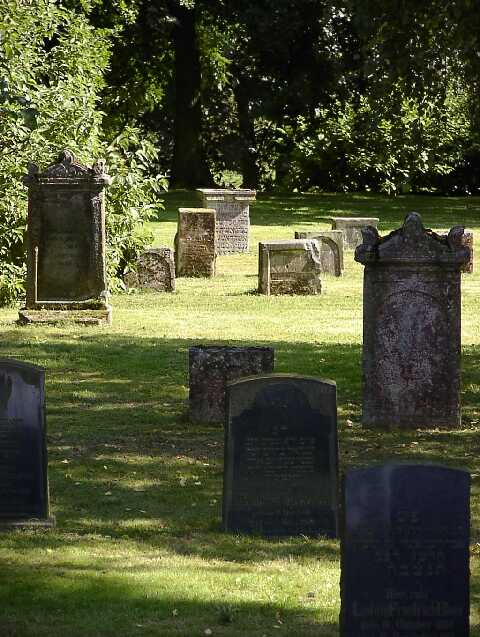
46 gravestones still exist - in February 1967 there are said to have been 60 to 70 [2]. Partly they are no longer decipherable. In one type of gravestone a marble or metal plate was inserted into local stone. These slabs have all disappeared. Since there are these gravestones also at the Marienhagen cemetery, they can be dated to the twenties of this century.
The stones are sometimes partly stuck in the ground, so that not the whole text can be read. One stone (1.1) is upside down.
The stones are numbered as follows: The first number indicates the row, the second the number in the row.
2. Overview of the cemetery (not to scale)
Layout of the gravestone descriptions Kurt-Willi Julius.
The pins are linked to descriptions of the gravestones!
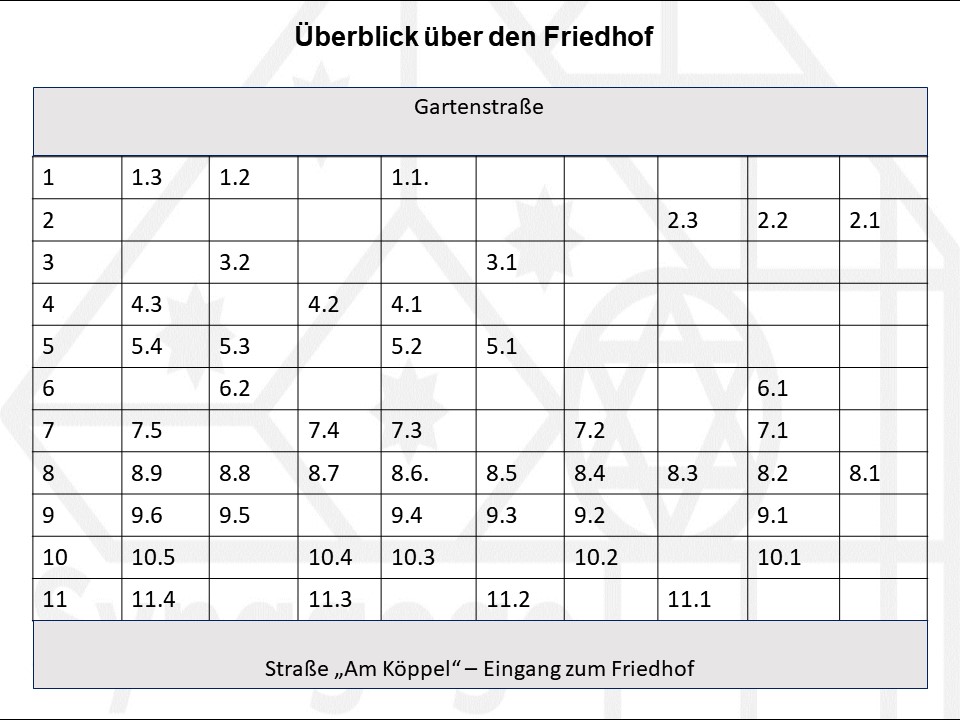
Please click on the pointers!
See the Pen CSS LED Lights by Eph Baum (@ephbaum) on CodePen.
3. Alphabetical index of graves
Names and gravestones are linked!
| CV´s of persons | Gravestone |
|---|---|
| Alexander, Amalie geb. Katzenstein (1829-1918) | |
| Blum, Frida geb. Stiefel (1855-1933) | |
| Blum, Levi (1820-1885) | |
| Blum, Louis Friedrich (1888-1915) | |
| Frankenthal, Bernhard (1863-1934) | |
| Frankenthal, Hermann Hirsch (1858-1920) | |
| Kaiser, Belchen geb. Rothschild (1798-1882) | |
| Kaiser, Salomon (1834-1908) | |
| Katzenstein, Abraham 1833 (1833-1903) | |
| Katzenstein, Emanuel (1839-1927) | |
| Katzenstein, Esther geb. Löw (1800-1870) | |
| Katzenstein, Fanny 1838 geb. Goldwein (1838-1906) | |
| Katzenstein, Fanny 1846 geb. Wertheim (1846-1910) | |
| Katzenstein, Jehannette geb. Wertheim (1850-1918) | |
| Katzenstein Samuel 1 (1830-1909) | |
| Külsheimer, Bendix (1843-1910) | |
| Külsheimer, Rosa geb. Maiberg (1816-1889) | |
| Külsheimer, Selma (1876-1900) | |
| Laser, Joseph (1848-1906) | |
| Mildenberg, Amalie 1858 (1858-1921) | |
| Mildenberg, Levi (1853-1935) | |
| Mildenberg, Michael (1805-1861) | |
| Mildenberg, Regina (1825-1902) | |
| Mildenberg, Regine geb. Speyer (1855-1923) | |
| Mildenberg, Salomon (1857-1934) | |
| Reichhardt, Rachel (1817-1874) | |
| Rothschild, Karoline (1840-1919) | |
| Rothschild, Moritz Moses (1833-1902) | |
| Rothschild, Spring (1797-1833) | |
| Schönhof, Rose, geb. Simon (1794-1866) | |
| Schönthal, Regine, geb. Kratzenstein (1861-1933) | |
| Stern, Selig (1800-1899) |
The German text on the tombstones is hardly distinguishable from those of the Christians. In the Hebrew text the date of death is found in Jewish time calculation.
The Jews count the years since the creation [3]. According to this we are in the year 5751. On the gravestones the year is always given in "small count". That means that the thousand number 5 is omitted. After that we are now in the year 751.
While we arrange our months according to the sun, the Jews have a moon calendar. Every few years, leap months are inserted to bring the year back in line with the sun. That's why the months always correspond only approximately with the ones we are used to.
The following is noticeable at the Jewish cemetery in Vöhl, but also applies to other cemeteries:
1. the symbol of the Jewish star appears from about 1900 on.
2. the later people were born, the more German names they received. While Jewish children were still called Selig and Rahel around 1800, names like Hermann and Ludwig were more fashionable from about 1850. However, they also received a Hebrew name.
3. on the earlier stones one side is written in German, the other in Hebrew. Later both were written on one side, the second side remained blank.
4. on the older stones there are sometimes quite interesting things written in Hebrew text. The newer the stones are, the more stereotyped the Hebrew text becomes.
[1] Cf. Arnsberg, Paul; Die jüdischen Gemeinden in Hessen. Anfang - Untergang - Neubeginn, vol. 2, Frankfurt 1971, p. 329.
[2] Ibid.
[3] When this counting of time was introduced, it was at least thought that this was the age of the earth.
The text above is - also in the footnotes - to a large extent a transcription of the work of Christiane Hilmes. In a few cases a correction was made by Karl-Heinz Stadtler after consultation with her.
Additional remarks to the individual graves were made by Karl-Heinz Stadtler and are marked in detail.
The text parts were digitized and supplemented by new photos by Kurt-Willi Julius in December.
B. Memorial at the jewish cemetery
 Foto: Karl-Heinz Stadtler
On Thursday, 19th of october 2023 a memorial was inaugurated to remember all buried jews at the Cemetery.
C. Essay about the Jewish Cemetery in Voehl
von Karl-Heinz Stadtler
The history and Jewish funeral rites are described in the essay Der jüdische Friedhof in Vöhl
D. Jewish Cemetery in Voehl on the Website „findagrave“
Camille Calman, whose ancestors from the Rothschild family left Vöhl for the USA as early as the mid-19th century, photographed the gravestones in 2019 and published them on the findagrave website. „Vohl, Landkreis Waldeck Frankenberg, Hessen, Germany“ This is the largest collection of burial data in the world and is based in Utah, USA.
by Karl-Heinz Stadtler
 ©Thomas Höckmann 2005 ©Thomas Höckmann 2005 |
Itter dominion- district of Voehl
The medieval Ittergau which extended from Herzhausen located at Lake Eder to Lake Diemel developed in the 12th century into the Itter dominion, later becoming the district of Vöhl. In connection with the peace settlements of the Thirty Years’ War the 20 villages became an enclave of Hesse-Darmstadt, located between Waldeck and Hesse-Kassel. The following map shows that the dominion of Itter itself had exclaves in Waldeck which were Höringhausen, Eimelrod, Deisfeld and Hemmighausen.
The Landgraviate which later became the Grand Duchy of Hesse- Darmstadt was definitely not a state friendly towards the Jewish community as several “Judenordnungen” prove. However, they allowed Jewish families to settle possibly to improve and strengthen their economy. The Jewish community consisted of families from Vöhl but also from neighboring villages like Marienhagen, Basdorf and Oberwerba. An equally large community developed in Höringhausen and smaller ones could be found in Altenlotheim and Eimelrod. When looking at the total population of these villages one can see that about 15 to 20 percent of its population consisted of Jewish families.
The oldest written record of a Jew in Vöhl dates back to 1682. By 1705, 8 houses in Vöhl were owed by Jews and only half a century later the number of Israelis as they were often called had risen to about 140.
read more
Synagogue in Voehl
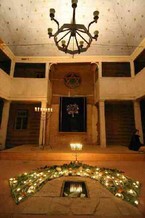
The inside of the main room on the occasion of a memorial ceremony on the “Reichspogromnacht” on November 9th 1938.
Until 1881, the left part of the building was used by the teacher and his family as living quarters. This man was Salomon Bär who had a good pedagogical education and was considered honorable in the village.
In 1938 (August) probably under pressure from the state the 13 remaining Jews sold the synagogue to a Christian family which is why the building survived the “Reichspogromnacht” on November 9th 1938, Hitler´s rule and the Second World War. The main room was used as a building material store until 1974 after which it served as a drying room for laundry. Thanks to that it remained mostly untouched with its starry blue sky and the women´s gallery which goes almost all around the building.

The Jewish cemetery
Three years after the construction of the synagogue its members sought the permission to have a Jewish cemetery at the village´s border which got granted by the community council. Before that, they were probably buried at the cemetery in Frankenau, back then about 3 hours´ walk away.
During Hitler´s rule the cemetery was vandalized twice. In 1941 the head of government in Kassel ordered the closure of all Jewish cemeteries in the then district of Frankenberg. In some places the order was not followed as promptly as in Vöhl where the cemetery was completely leveled. Gravestones where used by citizens to build their houses and by the end of the war only 45 stones were left. Those had to be put back on the cemetery by orders of the Occupying Powers.
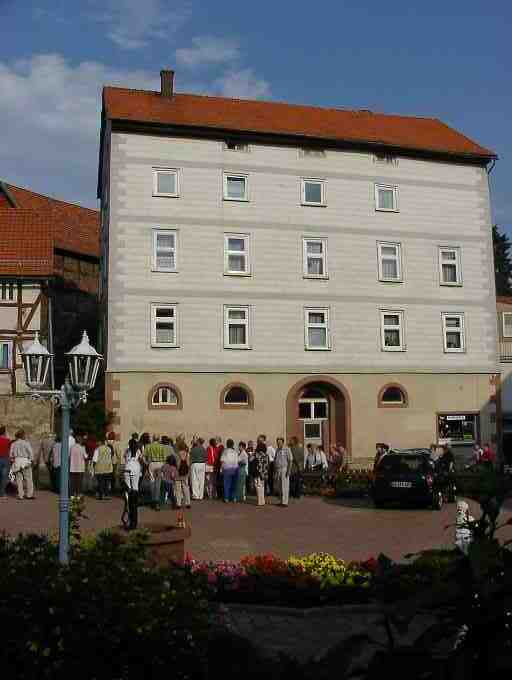 Home of Ascher Rothschild
Rich traders – poor guys
Several big houses of today’s Vöhl were built and inhabited by Jews. One of the wealthiest ones was merchant, trader, and moneylender Ascher Rothschild who in the 1830´s built a noticeable house in the center of the village. In the building was a mikvah which was probably also available for other families. After 1881 it also housed the Jewish school. He even financed the construction of the ship that was built by the protestant church and which had to be torn down around 1840 due to poor condition.
Other wealthy families were the Salbergs, the Kaisers, and the Sterns; Blumes and Katzenstein were also quite successful. Among the Jewish community, however, there was also poverty; this applied to parts of the Kugelmann and Liebmann families but especially to the Lazarus family who made their living as ragpickers.
Other names of larger families in Vöhl, Basdorf, and Marienhagen are: Bär, Frankenthal, Kratzenstein, Külsheimer, Laser, Löwenstern, Meyer, Mildenberg, Schaumburg, Schönhof, and Schönthal.
The most common occupations were being a butcher, work at the spinning mill, as well as being merchants for different goods like fruits, cattle, and leather. Most of the Jews had just like the Christian families an agriculture on the side. In the middle of the 18th century Simon Mildenberg started to train Apprentice so that they would become carpenters.
Was there an integration?
For the longest time Jews and Christians used to live side by side but not in a combined community. That was until the beginning of the 19th century where their relationship started to improve slowly by steady. Numerous Jews were members of the villages council, some of them for 20 years, David Stern for 40 years. Many of them were also (co-) founders of multiple society’s and groups that were part of Vöhl´s community. Max Mildenberg who’s family was part of the singing society was an active sportsman and took part in the first soccer team as well as being known as a great track and field athlete. After Hitler became chancellor everything changed since they dissolved those clubs and got rid of their Jewish members, sometimes in a very unpleasant way.
Victims of the genocide
In 1933, 45 Jews still lived in Vöhl and Marienhagen. Gradually they moved away into bigger cities like Kassel and Frankfurt and emigrated into different counties. In August 1938 only 13 Jews remained: 3 men, 9 women and a 6-year-old boy. Some moved to Frankfurt others got deported to Riga, Sobibor, Majdanek and Theresienstadt in December 1941, June and as well in September 1942. 45 women, children, and men who have lived in Vöhl and its neighboring villages were killed in the extermination and concentration camps. On November 9th at the annual commemoration ceremony more than 70 names are being read out to remember not only Vöhler Jews but also their spouses and children.
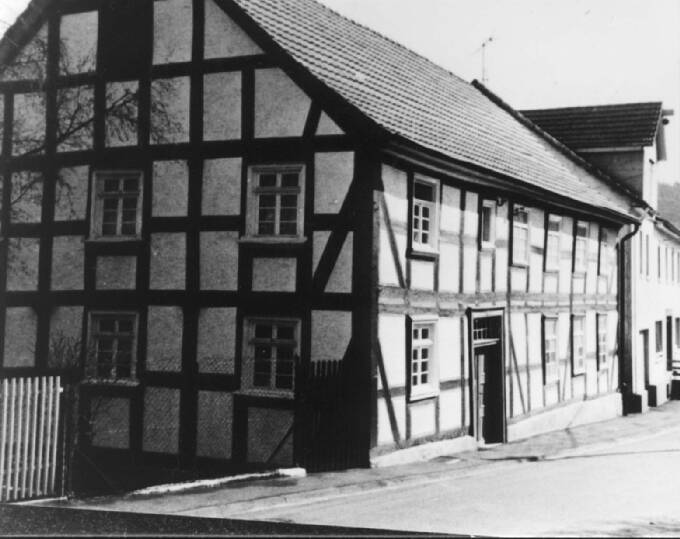
Förderkreis Synagoge in Vöhl
On November 9th, 1999, more than 70 citizens of the district of Vöhl founded the “Förderkreis Synagoge in Vöhl e.V.” and bought the old building to renovate it.
From the beginning and at every stage of construction events took place there: concerts, cabaret events, lectures, art exhibitions, and much more which the “Förderkreis” plans each and every year in a different yet unique way. In addition to cultural programs and its work at monument preservation it also researches about Jews in Vöhl and its region.
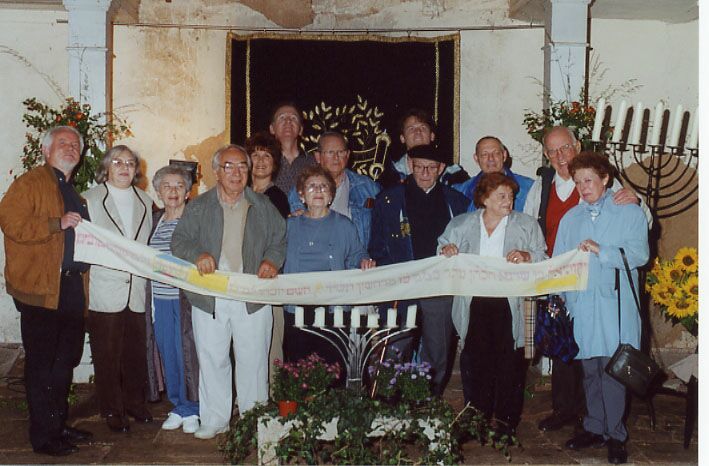
Visits by former Jewish residents
For this reason, it was important to them to invite former Jews from Vöhl, as far as they were still alive. 15 of them visited in September 2000 and told stories about their childhood in Vöhl, the horrors they went through and the suffering they and their families experienced. They gathered in front of the synagogue´s Torah wall for a group photo.
Museum in the synagogue
The main room has since been completed. In the former living quarters, pictures, documents, and cultural objects remind us of the time when Jews also shaped the image of our village and contributed to its development.
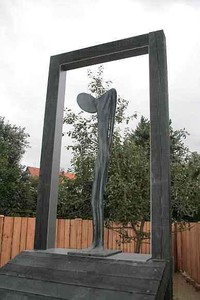
Memorial to all deportees of the Nazi era
A memorial in the garden of the synagogue, created by the Frankfurt artist E. R. Nele, is an impressive reminder of all those that got deported during the Nazi regime. It is dedicated partly to the more that 700 Jews from Waldeck-Frankenberg that either got tortured and killed at home or that got deported to extermination camps and got gassed, shot, or killed between 1933 and 1945. But it also talks about Communists and Social Democrats, Sinti and Roma, Jehovah’s witnesses, homosexuals, prisoners and of cause all the Jews from other districts and counties.
Subcategories

© diagram by Karl-Heinz Stadtler
Family-trees assembeld by Karl-Heinz Stadtler
Text by Karl-Heinz Stadtler 2023
In 2000, we invited former Vöhl Jews or their descendants. Among other things, we placed an ad in the magazine "Aufbau" looking for potential guests. A Joseph Rosenthal from Coral Springs in Florida contacted us with the information that his mother was a born "Voehl" from Gedern in Upper Hesse. In Gedern there had been three "tribes" "Voehl". His family had a document from the year 1732, in which the right to setle in Gedern was granted to the Schutzjuden Joseph from Vöhl by the Count of Solms.
Joseph was a quite common name in Vöhl. It was not possible to determine which Joseph it could have been.
More or less by chance, but thanks to Google in a quite simple way - by entering the names "Vöhl" and "Gedern" -, we recently found on the Internet quite quickly "Simcha Simon Kohen Zedek", who was born in Vöhl and died in Gedern. His existence, that of his son and grandson and other descendants can be found on the genealogy platform "Geni.com". Whether Simcha Simon was that Joseph or whether another Vöhl moved to Gedern at about the same time, we do not know yet. The name addition Kohen Zedek gives a small identity hint. Kohen or Kohanim are descendants of the temple priests in ancient Israel, see themselves even in the succession of Aaron, the brother of Moses, entrusted by God with the priesthood. In Vöhl, the Katzenstein family belonged to the Kohanim; this family had been resident in the village since at least 1705.
In the 18th century, Jews generally did not yet have surnames, but supplemented their own first name with that of their father. In the first decade of the 19th century - at the time of the occupation of large parts of Germany by France - family names also became obligatory for Jews. Many families chose the name of the place of origin. This explains why the descendants of that Simcha Simon chose Vöhl as their surname.
The Joseph Rosenthal mentioned at the beginning can be found at the botom of the Simcha Simon family tree. He died in 2008. It is a pity that we did not contact him.
Several hundred people comprise the descendants of Simcha Simon. We have initially put four family trees on the net. Gradually we will add short biographies of the persons to them.
We have granted the Jews in the succession of Simcha Simon their own folder on this website.
These objects that have survived from the time of the lively Jewish community in Vöhl.
Please click on the tiles!
See the Pen CSS LED Lights by Eph Baum (@ephbaum) on CodePen.
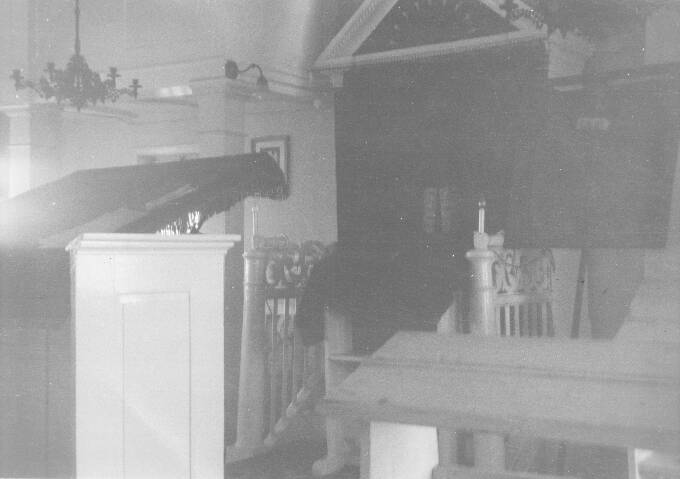
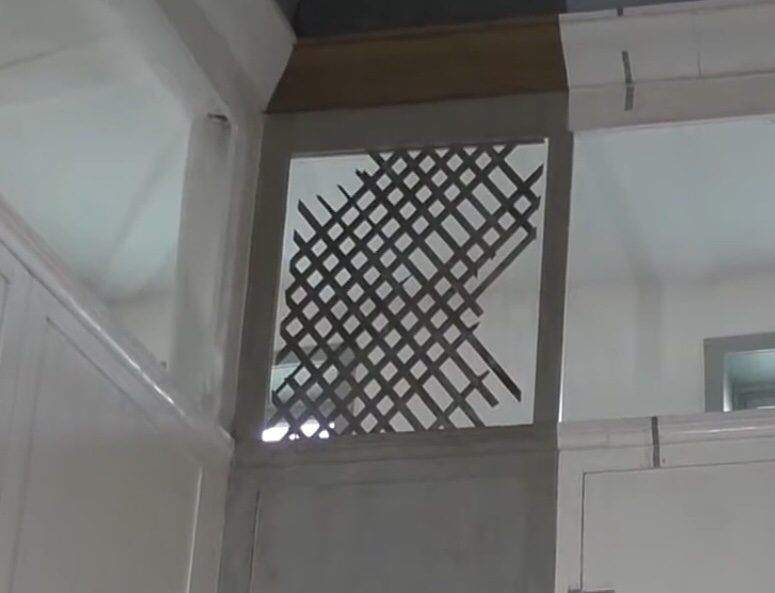
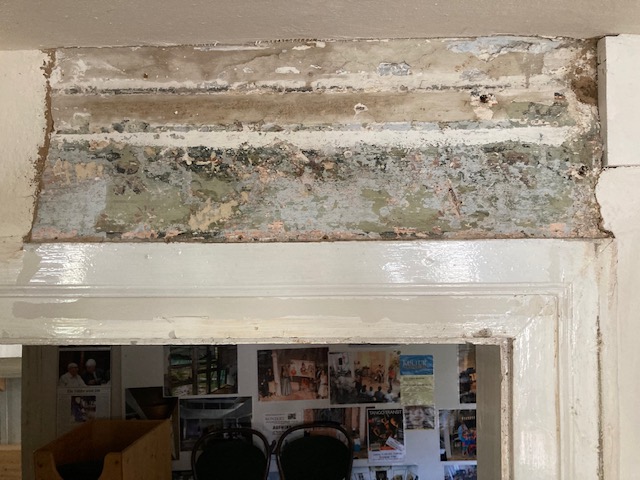
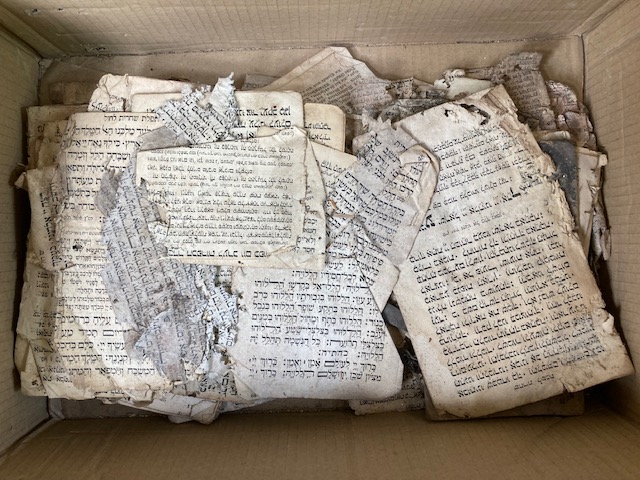


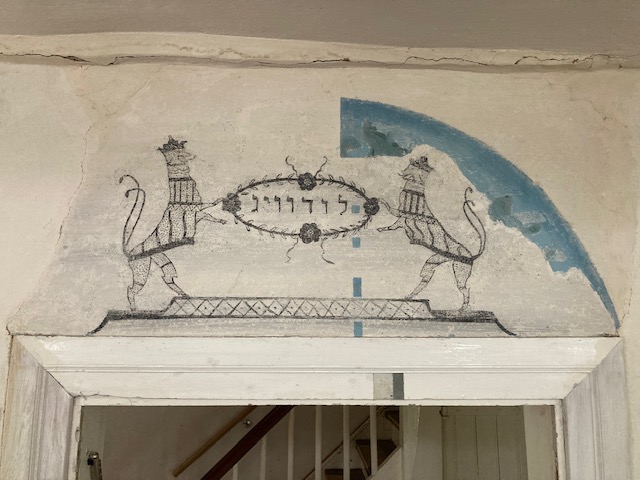


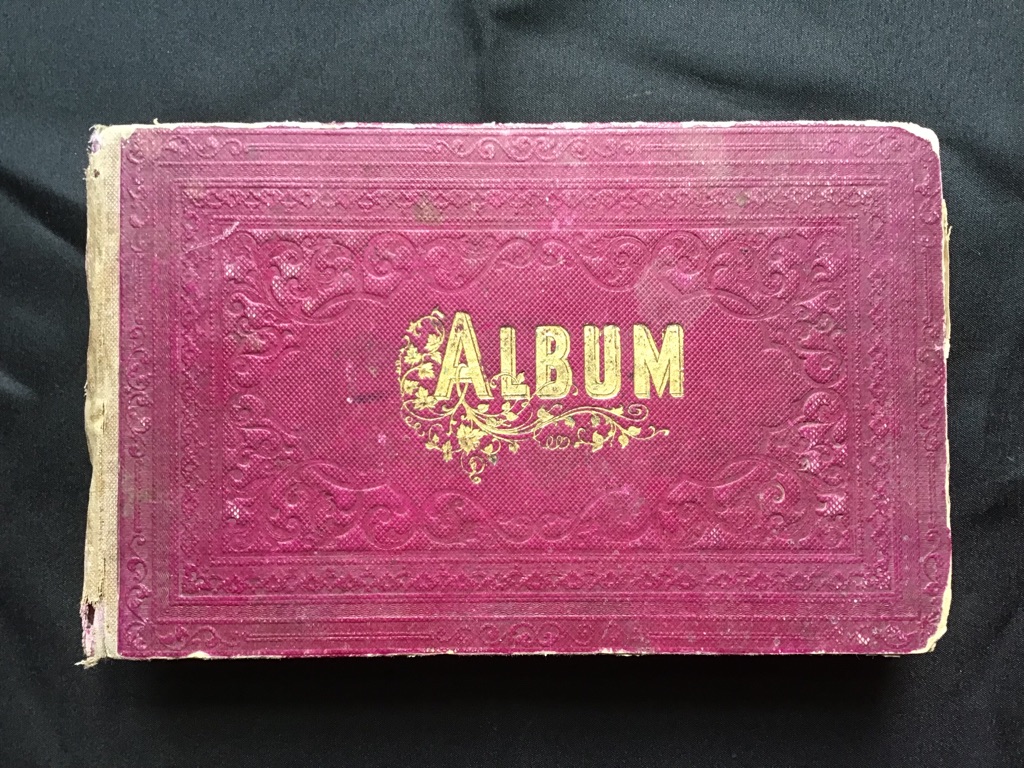


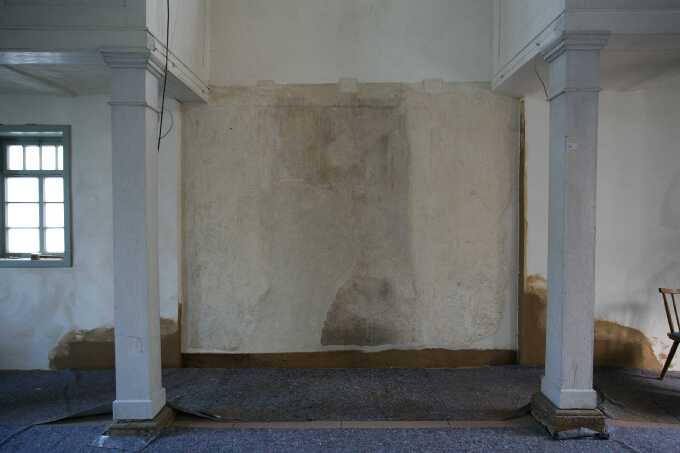
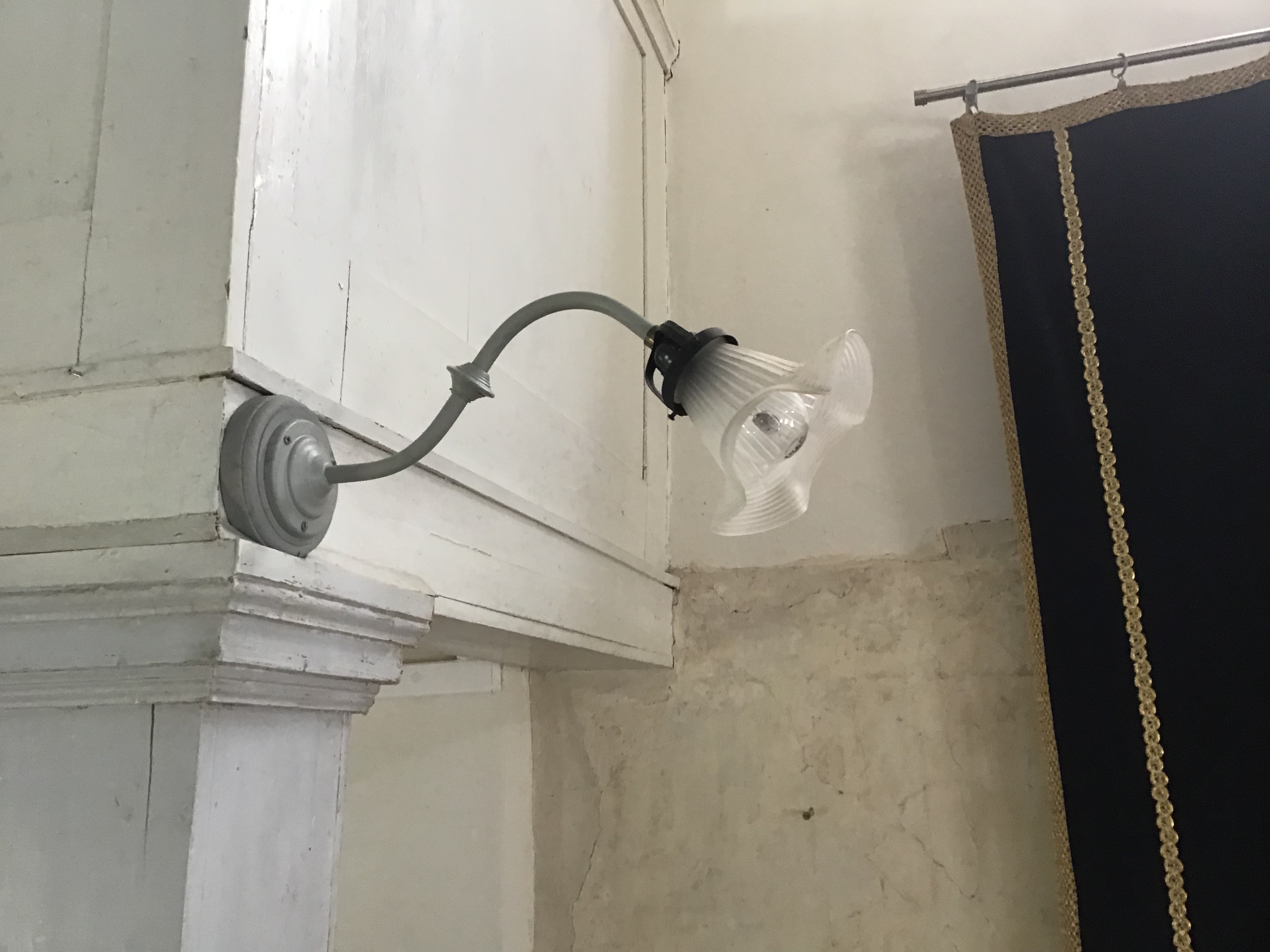
The museum showcases various aspects of Jewish culture and way of life. The exhibition spaces are the former living quarters within the synagogue. The synagogue’s prayer hall is part of the museum. From the outside, the entire building has been completely repainted. In the prayer room, however, the dome, the gallery and parts of the sandstone floor have been preserved. Remains of the wall painting can be found above the endivance door. The mural is preserved behind the location of the Torah shrine. This gives an idea of the atmosphere of the Jewish prayer room in the prayer room.
List of all exhibits
The other exhibits are either of contemporary origin or of unknown age. They can illustrate the former Jewish life in Vöhl. Descriptions of the exhibits by Karl-Heinz Stadtler (Translation with the help of www.deepl.com).
- Besamim can
- Books found outside the Geniza
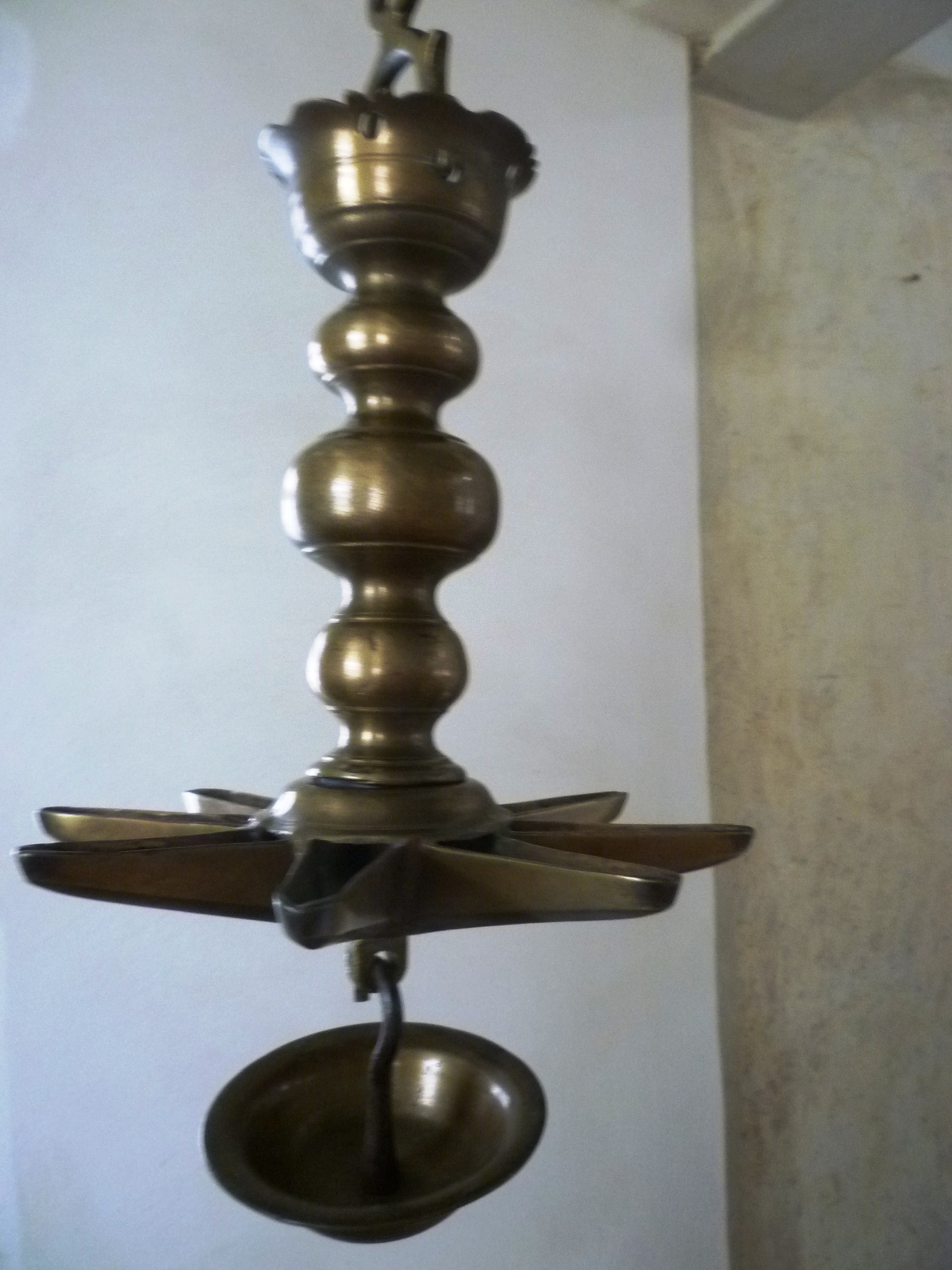
- Ceiling chandelier with 7-arms
- Clothes hangers of Jewish shops
- Colour findings in the synagogue
- Ester roll
- Foundation stone of synagogue in Voehl
- Geniza in Voehl
- Hanukkiah
- Hawdala candle
- Homage inscription on supraporte
- Homage plaque to Ludwig I. of Hesse-Darmstadt
- Inscription and nail on synagogue pillar
- Installation E.R. Nele, ‘They walked upright...’
- Jad (EN)
- Jewish calendar with current date
- Kiddush cup
- Kippa (EN)
- Mappa / Torah pennant
- Menorah
- Mezuzah
- Old photos
- Passover book, 5706-1946
- Poems and Writings collected by Selma Rothschild
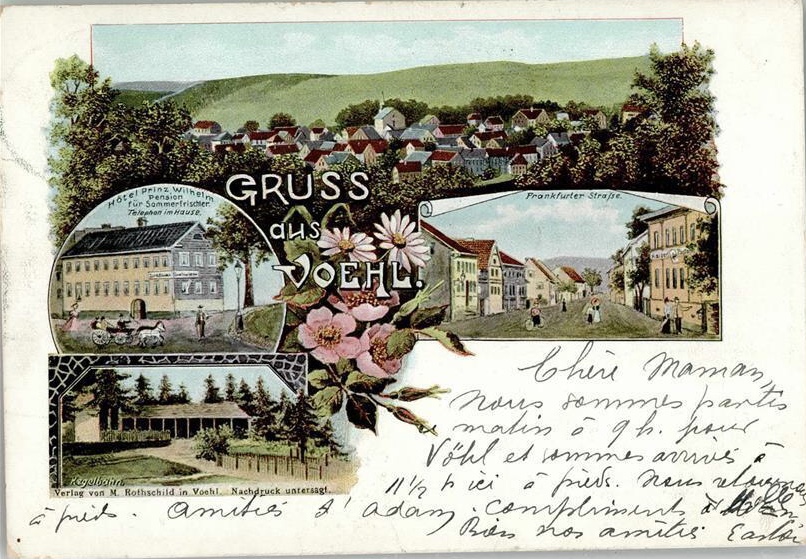
- Postcard ´Gruss aus Vöhl´
- Printer Typsetting box with hebrew letters
- Radio set
- Sabbath lamp of family Frankenthal
- Seder plate
- Shofar horn
- Shop sign
- Siddur (EN)
- Soil find, Candle wall holder
- Soil find, Wooden hand
- Stone flooring of synagogue
- Synagogue benches
- Tachrichim, Shroud
- Tallit / Prayer shawl
- Tanakh
- Tefillin (EN)
- Torah bearer
- Torah curtain from New York
- Torah scroll for the home
- Torah scroll from Witebsk
- Torah scroll from Wroclaw
- Vault with Starry sky
- Wall lights of the Torah shrine
- Wall of the Torah shrine
- Women´s gallery
- Zedaka box
- Zohar from 1882
